Nginx Introduction and Uses
What is a Proxy?
A proxy is an intermediary that acts on behalf of another system. In networking, it sits between a client and a destination server.
Everyday Example
If your college network blocks a website and you use a VPN, your request first goes to the VPN server. That server then forwards the request to the target website.
This is an example of a forward proxy.
What is a Reverse Proxy?
A reverse proxy sits in front of your application servers and receives requests from users before forwarding them to backend services.
It is commonly used for:
- Routing traffic
- Security controls
- Load balancing
- Better performance and caching
Simple Example
Suppose a single machine runs two apps:
web1.comon port3000web2.comon port4000
Instead of exposing ports publicly (web1.com:3000, web2.com:4000), Nginx can map clean domains to each backend service.
Reverse Proxy Setup with Nginx
1) Install Nginx
2) Configure Routing Rules
Open your Nginx config:
Minimal example:
3) Restart Nginx
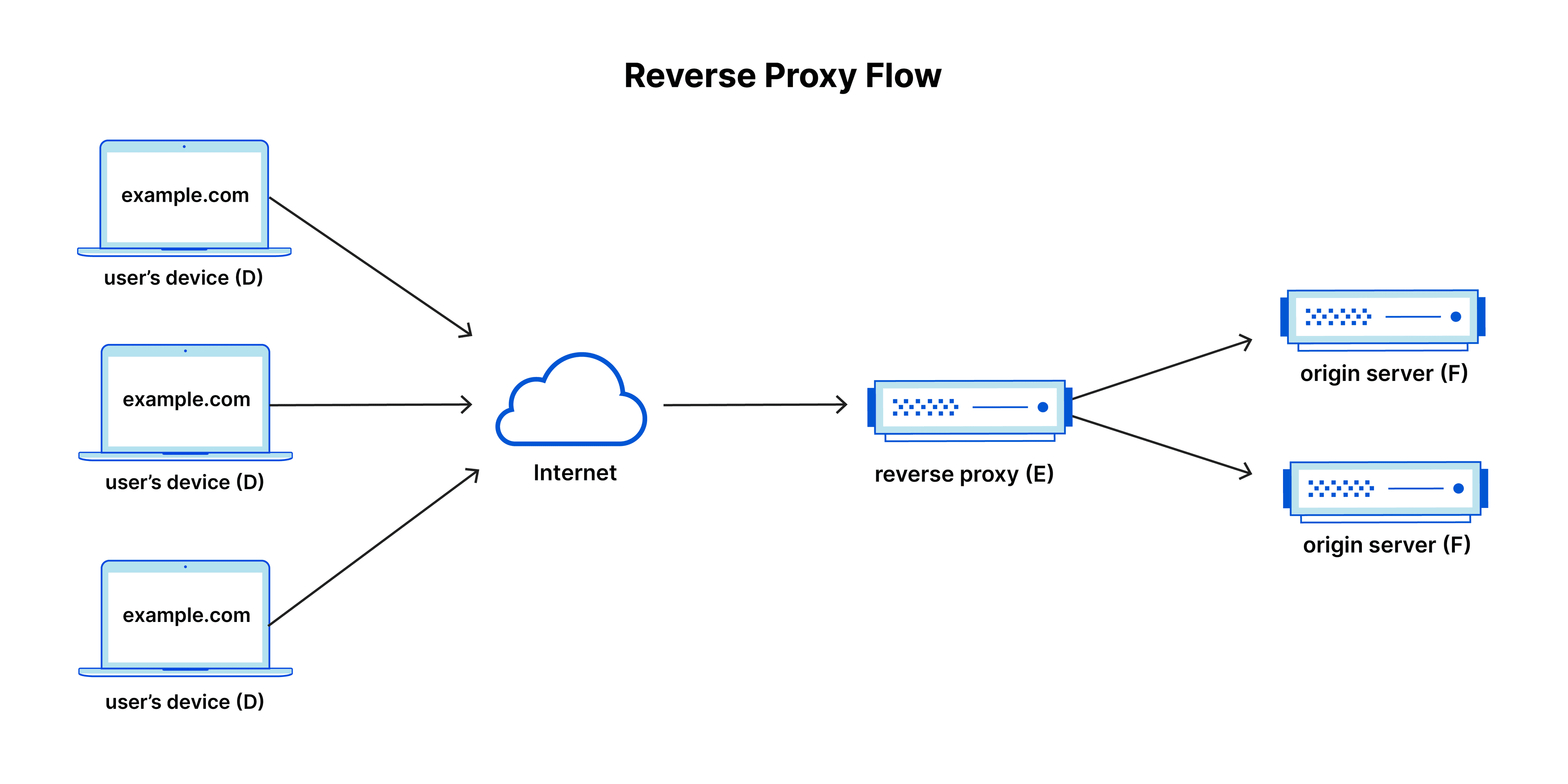
With this setup, users access clean URLs while Nginx handles backend routing behind the scenes.
Read more in the official docs: Nginx Documentation.